

Lamenting vs. Self-Pity
If you’ve known trauma, grief, or long seasons of disappointment, you are not “too much” for God. He welcomes your full story. Scripture gives us a holy way to bring our pain to Him—lament—and it also warns us about a counterfeit that looks similar but slowly poisons hope—self-pity. This post will help you tell the difference, so you can heal with God instead of getting stuck beside your wounds.
What lament is—and what it is not

Lament is the honest pouring out of pain toward God. It is grief spoken in faith. Lament says, “This hurts deeply, Lord, and I don’t understand—but I trust You with my sorrow.”
“The Lord is close to the brokenhearted and saves those who are crushed in spirit.” (Psalm 34:18, TPT)
“Pour out your heart like water before the presence of the Lord.” (Lamentations 2:19)
Wallowing in self-pity, by contrast, turns inward and away from God. It rehearses injury, elevates “self” as the focus, and quietly resists comfort, help, and truth. It may feel like protective comfort, but it' not love—it's a snare.
Bottom line: Lament faces the wound with God. Self-pity circles the wound without God.
Why the difference matters
Trauma teaches the body and brain to brace for pain. Lament gives your heart a safe place—the Father of Love—to process what happened. Self-pity, however, partners with the father of lies to keep you stuck in the past. It numbs for a moment, then hardens into a mindset.
Lament validates your story and welcomes God’s presence.
Self-pity isolates you from people and slowly distances you from your Heavenly Father.
Lament moves grief toward healing.
Self-pity becomes a cycle of replay, blame, and despair.
As Pastor Rick has often said: "Self-pity is the super-glue of hell—it keeps you stuck to old trauma and steals tomorrow’s hope."
Bible lenses: how Scripture frames both paths
“Don’t become so well-adjusted to your culture that you fit into it without even thinking. Instead, fix your attention on God. You’ll be changed from the inside out.” (Romans 12:2, MSG)
Lament fixes attention on God; self-pity fixes attention on self.
“You are of God, my little children, and have conquered them; for the One who is in you is greater than the one who is in the world.” (1 John 4:4, TPT)
Lament agrees with this truth; self-pity argues, “It will never change.”
“Be well balanced and always alert… your enemy, the devil, roams around incessantly, like a roaring lion looking for its prey to devour.” (1 Peter 5:8, TPT)
The enemy loves to strike on our worst days with the lure of self-pity.

Quick contrast: Lamenting vs. Self-Pity
Lamenting (toward God)
Names the pain and turns to God with it
Asks boldly for comfort, justice, and help
Receives God’s love and truth
Ends in trust, even if tears remain
Leads to comfort, clarity, and courage
Self-Pity (away from God)
Replays the pain and turns inward
Demands attention but resists help
Clings to lies (“I’m helpless. Nothing changes.”)
Ends in blame and bitterness
Leads to isolation, stagnation, and pride
Self-pity is pride wearing a wounded mask: “I deserve better”—while resisting the very truth and help that brings healing.
Where self-pity hides

False humility: “I’m fine—it’s not a big deal,” (but you’re collapsing inside).
Martyr persona: Suffering becomes an identity badge rather than a season.
Endless replay: The story re-opens daily; healing cannot scar.
Chronic exception: “That won’t work for me. I’m different.”
Stubbornness: “Stubbornness is as bad as worshiping idols.” (see 1 Samuel 15:23, TPT)When self is the idol, pity for self becomes its liturgy.
A simple, biblical path: the 5 R’s of lament
1) Recognize the spirit at work
“This is self-pity talking, not the Holy Spirit.”
2) Repent for agreeing with it
“Stop imitating the ideals… be inwardly transformed…” (Romans 12:2, MSG)
3) Renounce its lies and legal rights
“Greater is the One within me…” (1 John 4:4, TPT)
4) Receive the Father’s love in the very place pain ruled
“Blessed are those who mourn, for they will be comforted.” (Matthew 5:4)
5) Rebuild with truth and gratitude (new habits, new words, new focus)
“Thank God in everything…” (1 Thessalonians 5:18, TPT)
How to practice lament
Turn to God: “Abba, here I am.”Tell the truth: “This happened. It still hurts. I feel afraid, angry, tired.”Ask boldly: “Heal my heart. Restore my joy. Lead me forward.”Choose trust: “I don’t see it all, but I trust Your love, Your timing, Your ways.”
“We all experience times of testing… But God will be faithful to you.” ( 1 Corinthians 10:13, TPT)
For friends and pastors walking with the wounded
Validate the pain without feeding self-pity.
Model lament by praying to God rather than rehearsing problems.
Refuse to partner with the replay loop; lovingly redirect toward truth.
Invite practical steps (counseling, community, routine, worship, gratitude).
Hold hope until they can hold it again.
Renunciation & Lament Prayer
Father of Love, I turn to You with my whole heart. I recognize where I’ve partnered with self-pity. In Jesus’ name, I repent for agreeing with its lies, I

renounce every covenant, altar, replay, and unholy soul tie with self-pity in my life and bloodline.I rebuke the spirit of self-pity and command it to leave me and my generations now, and not return, by the authority of the Lord Jesus Christ.Holy Spirit, come fill every place self-pity occupied—bring comfort, truth, and joy. Rewrite my story with hope. Teach me to lament with You, not to wallow without You.Father, heal my nervous system, renew my mind, and restore my relationships. Establish new patterns of gratitude, worship, and courage.Greater is the One within me than the one in the world. I receive Your love and step into freedom, in Jesus’ name. Amen.
Practical next steps this week
One page of lament each day: tell God the truth, then end with one sentence of trust.
Gratitude cue: 3 specific things you’re thankful for—out loud.
Scripture aloud: Romans 12:2 (MSG) and 1 John 4:4 (TPT).
Community touchpoint: Text or meet a safe person and ask for prayer.
Worship reset: 10 minutes of praise when the replay loop starts.
You are not your trauma, your lowest day, or your hardest memory. You are God’s beloved, and He delights to walk you through lament into healing. Self-pity is not your identity; it’s an intruder. In
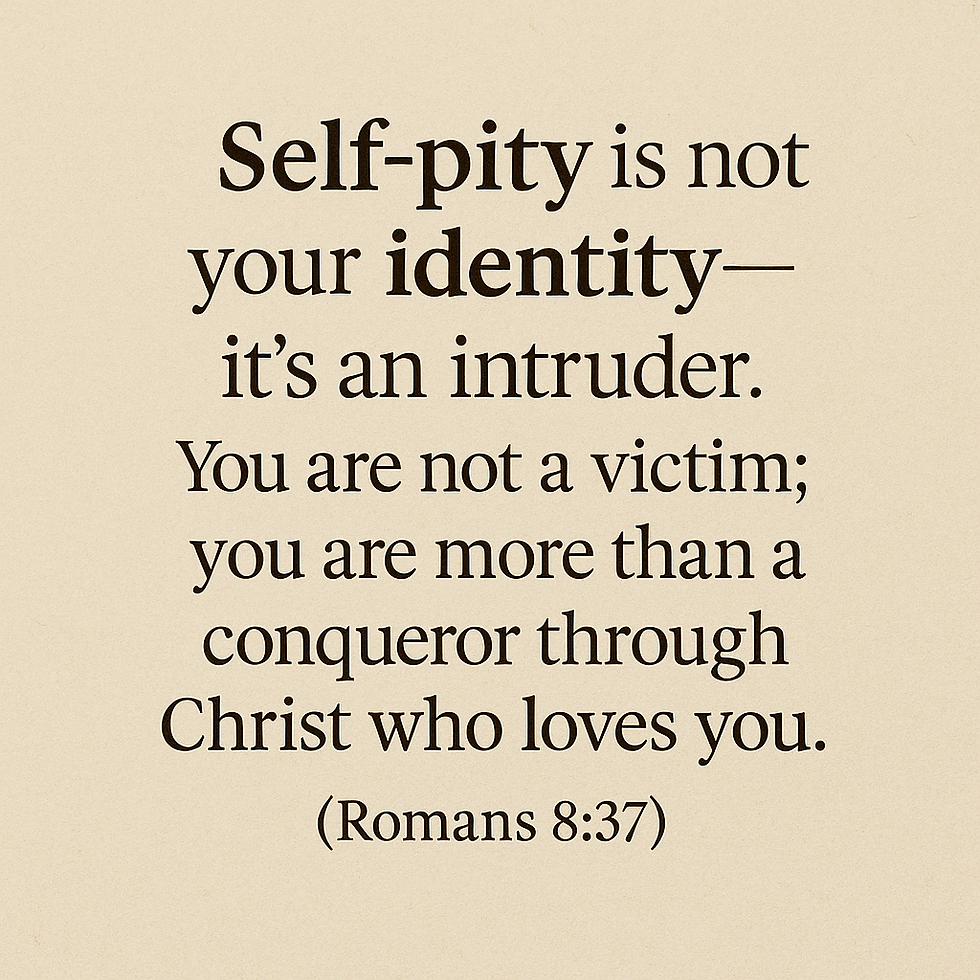
Christ, you are more than a conqueror, and your story—told in truth with God—becomes a testimony that frees others.
If you’d like more on breaking agreement with self-pity and walking in freedom, fill out a contact card for resources and next steps.


Thank you so much for this teaching and insight! Hallelujah ✝️
This is a good word. We must step up to become the overcomers we are called to be. Thank you for sharing your heart on this!